

Wills & Probate
When making a Will, creating a Lasting Power of Attorney, or dealing with the Estate of a loved one, it is essential to have the guidance and expertise of skilled and knowledgeable legal advisors.
So, if you are looking for a specialist Solicitor, look no further. Here at Hodgkinsons, we understand that putting your affairs in order or dealing with a relative’s Estate can be a stressful and sensitive time. That is why we offer a supportive and friendly service, with straightforward and clear guidance through every step of the process.
We provide expert legal advice in the following areas:
- Wills
- Estate planning
- Powers of Attorney
- Probate and Estate administration
- Personal Injury Trusts
- Court of Protection applications
We pride ourselves on our client-focused service. Our Lawyers can offer:
- Free telephone consultation
- Home visits when the Client is unable to reach our offices
- Urgent yet sensitive response where required
- Transparent quotes of our fees
- An approachable, friendly Team
We serve Clients in Skegness, Boston, Sleaford, Lincoln, Scunthorpe, Grimsby and rural Lincolnshire.
If you would like to speak with a member of our specialist Team of Solicitors, please call 01754 897150 or submit a contact form now.
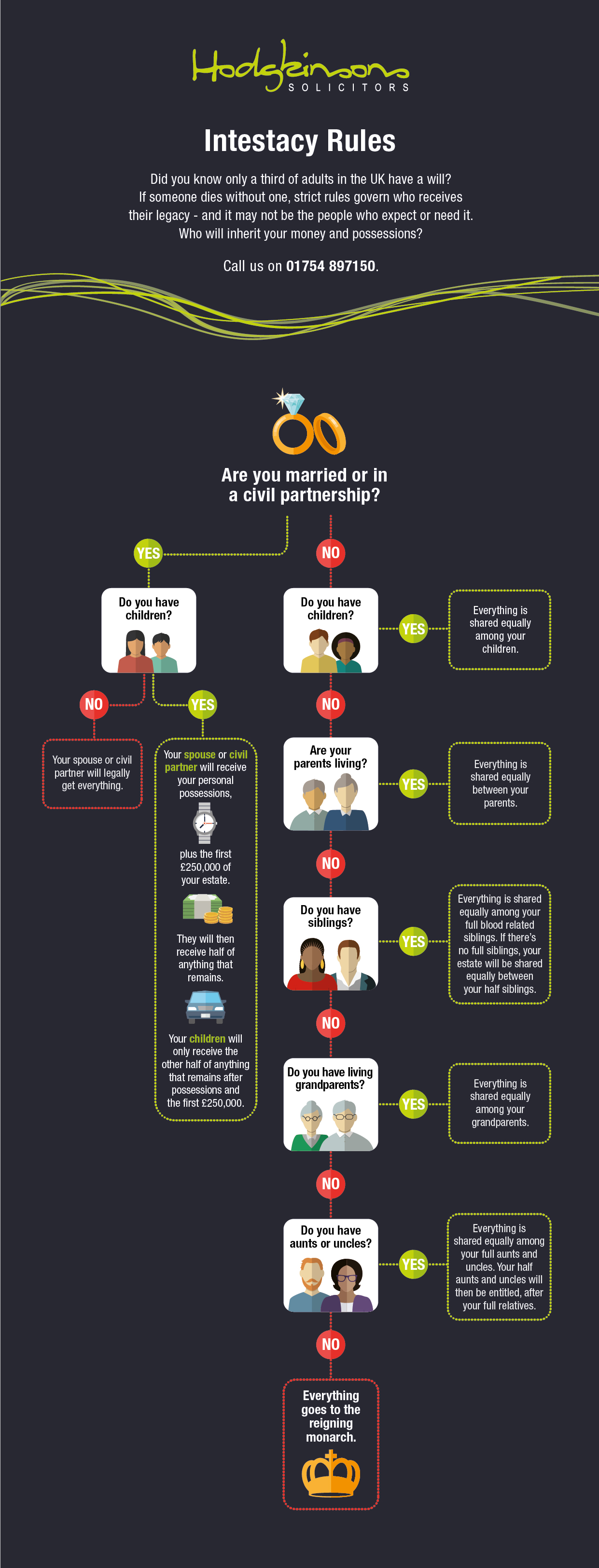
You can also learn more about intestacy rules in our downloadable flowchart.